

Clavius Crater, March 3 2023

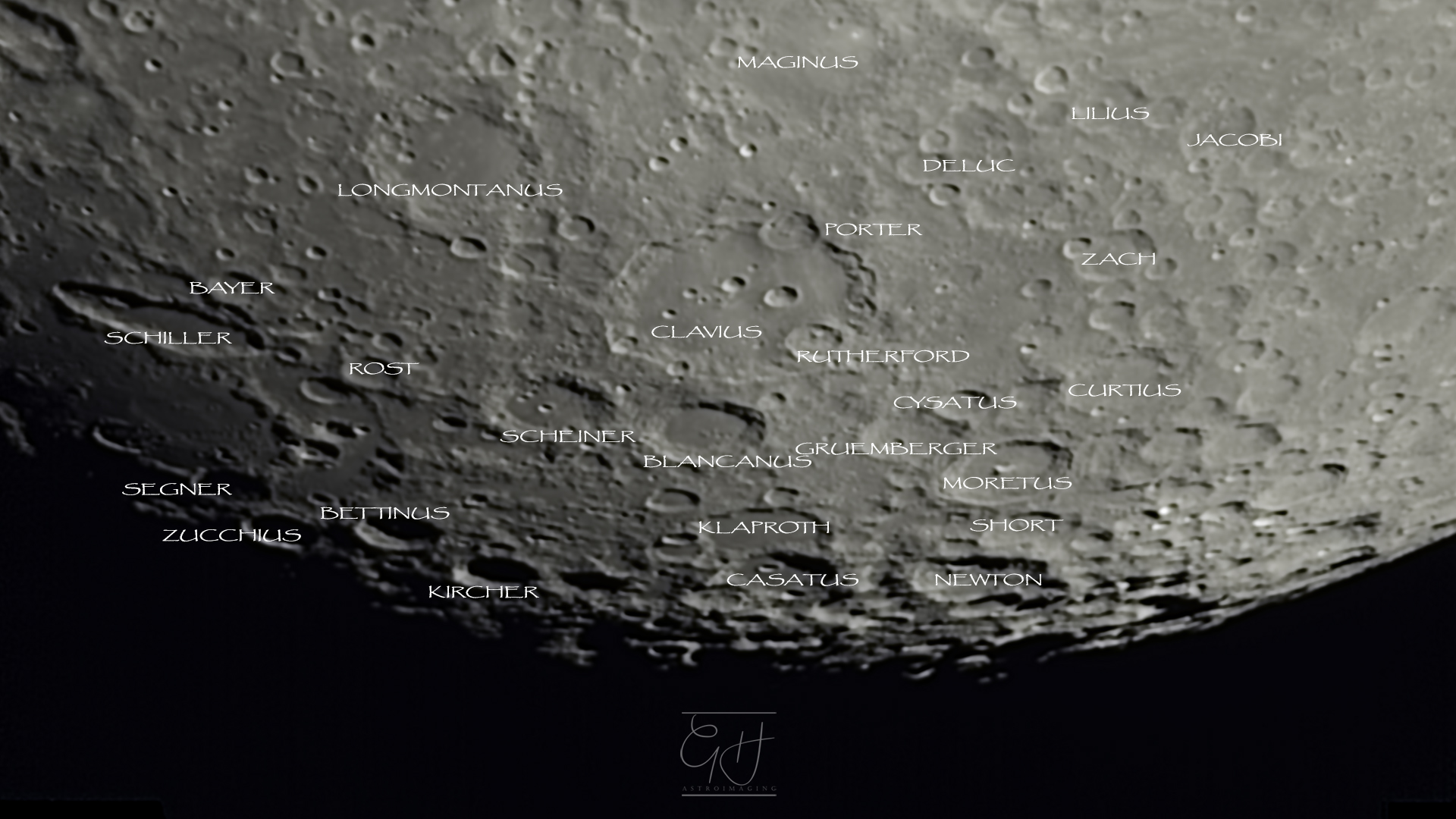
The weather forecast on this evening did not appear to offer much promise of a long opportunity for imaging, so one thing that can usually be achieved in a short time is grabbing some more moon shots.
I removed the Powermate from my system that I had used for the previous moon image, just to try to get a bit more of the lunar surface in the frame for this one. This returned the optical system back to somewhere around 2.1 metres in focal length.
The Southern edge of the moon's surface is covered in some fascinating craters, and their appearance changes markedly at different stages of the lunar cycle. This means that it never feels like shooting the moon is a repeat of what has been captured before. The shadows are always subtly different.
I once again made use of the Astrosurface software package to stack and sharpen this image in preference to my previous normal approach of PIPP, Autostakkert and Registax. This new package took a little bit of time to figure out, but I will definitely be sticking with it in future for any lunar or planetary images.
Equipment details:
Mount: Celestron Nexstar Evolution
Mount Accessory: Celestron Wedge for Nexstar Mounts
Telescope: Celestron Edge HD8
Camera: QHY5L-II C
Capture details:
Frames: 2100
Exposure per frame: 0.5ms
Total Exposure Time: 1.05s
Camera Control Software: SharpCap
Processing details:
Stacking Software: Astrosurface
Image Manipulation Software: Adobe Photoshop


Downloadable Raw Data Available
Logged in users can download the unprocessed integration masters for this image.




Sign in to enable commenting